Your Body Is Trying to Tell You Something: Anxiety, the Nervous System, and Why Rest Feels Impossible
gokc Healing Center | Kansas City, MO
You finally get a night off. No meetings, no obligations, nothing that absolutely needs to happen. You sit down on the couch. Maybe you pour a glass of wine. And instead of relaxing, you feel… worse. Restless. Irritable. Like you're forgetting something. Like you should be doing something.
Sound familiar?
If you're a high-achieving professional who struggles with anxiety, there's a good chance that rest — genuine, restorative rest — has started to feel almost impossible. Not because you don't want it. But because your nervous system has forgotten what it feels like to be safe enough to slow down.
This isn't a character flaw. It's not a discipline problem. It's biology — and it's something that therapy at gokc is specifically designed to help you with.
What's Actually Happening in Your Body
Your nervous system has one primary job: keep you alive. To do that, it's constantly scanning your environment for threats — physical, social, emotional — and calibrating your internal state accordingly. When it detects danger, it activates what most people know as the fight-or-flight response: cortisol and adrenaline flood your system, your heart rate increases, your muscles tense, and your attention narrows to the perceived threat.
This is a beautifully designed system. Under genuine threat, it is lifesaving. The problem comes when the nervous system gets stuck in that activated state — and starts treating ordinary professional and personal demands as though they were physical threats.
For high-achieving professionals, this happens gradually, often over years. The high-stakes work environment. The relentless expectations. The early experiences that taught you that falling short had real consequences. Over time, your nervous system learns that staying on alert is the default safe state. Vigilance becomes your baseline. And the system that was designed to turn on in an emergency starts running at a low-grade emergency level all the time.
"Your nervous system has learned that vigilance is safety. Rest starts to feel like a risk. That's not weakness — that's an adaptive response that no longer serves you."
This state has a clinical name: chronic hyperarousal. And once you understand it, a lot of things that felt confusing about your experience start to make sense.
How Chronic Hyperarousal Shows Up (Beyond "Just Stress")
Most people associate anxiety with the mind — with worrying, overthinking, catastrophizing. And yes, those are real. But chronic hyperarousal is also profoundly physical. Here are some of the ways it shows up in the body that high-achieving professionals often overlook or dismiss:
Physical signs of a nervous system stuck "on"
Jaw clenching or teeth grinding — often during sleep, sometimes during the day
Persistent shoulder and neck tension that no amount of stretching or massage fully resolves
Shallow breathing — breathing from the chest rather than the belly, often without realizing it
Digestive issues — IBS, nausea, or upset stomach with no clear physical cause
Difficulty falling or staying asleep even when you're exhausted
Feeling "wired but tired" — bone-deep fatigue that somehow doesn't translate into being able to rest
Heightened startle response — being easily startled by sounds, notifications, or unexpected interactions
Difficulty feeling pleasure — activities that used to feel enjoyable now feel flat or inaccessible
If you're nodding at three or more items on that list — and if you've been managing them for long enough that they feel normal — that's important information. Your body is not failing you. It is communicating.
Why Thinking Your Way Out Doesn't Work
Here's the thing about a nervous system stuck in hyperarousal: it doesn't respond well to logic. You can intellectually understand that the presentation tomorrow isn't a life-or-death situation. You can make a cogent argument to yourself that you've handled harder things and come out fine. You can know, rationally, that you deserve rest.
And your body will continue to brace anyway.

That's because the stress response operates below the level of conscious thought. It is faster than reason — designed to be, because in a genuine emergency, stopping to think is a liability. The part of your brain that processes threat (the amygdala) can trigger a full stress response before your prefrontal cortex — the thinking, reasoning part — has even had a chance to weigh in.
This is why strategies like journaling, positive thinking, or even most conventional talk therapy can feel inadequate for anxiety that lives in the body. They're addressing the thinking mind, but the anxiety isn't primarily coming from your thoughts. It's coming from your nervous system's learned patterns — and those require a different kind of intervention.
What Somatic Therapy Does Differently
Somatic therapy — body-centered therapy — works with the nervous system directly. Rather than focusing primarily on thoughts and narrative, it works with physical sensation, movement, and the body's own signals to help the nervous system move out of chronic activation and back toward regulation.
At gokc Healing Center, our therapists incorporate somatic approaches into treatment for anxiety that integrate beautifully with other evidence-based modalities. Here's what that might look like in practice:
Learning to notice your body's signals
Many high achievers have spent years overriding their body's signals in service of getting things done. Somatic work begins with something deceptively simple: learning to notice. Where do you carry tension? What does anxiety feel like as a physical sensation before it becomes a thought? This awareness, developed over time, gives you early access to your nervous system's state — and the ability to respond rather than react.
Titrated exposure to being "off"
For nervous systems that associate rest with danger, the solution isn't to force yourself to relax — it's to slowly, safely expand your tolerance for stillness and ease. This is delicate, skilled work, and it's one of the reasons having a qualified therapist matters. What looks like "just sitting quietly" to an outside observer is actually a deeply layered process of nervous system re-education.
Discharge and completion
Stress responses that don't complete — that get interrupted before the body has a chance to return to baseline — get stored in the body. Over years, this can create a kind of backlog of incomplete stress responses that contribute to chronic tension and hyperarousal. Somatic approaches help your body complete those interrupted cycles, releasing stored stress in a way that's gradual, supported, and ultimately deeply liberating.
How EMDR Addresses the Root
Often, what's keeping a high-achieving professional's nervous system chronically activated isn't just the current pressure — it's the accumulated weight of experiences that taught them the world was unsafe, that their worth was conditional, or that they had to keep performing to survive.
EMDR therapy — Eye Movement Desensitization and Reprocessing — is one of the most powerful tools available for addressing these roots. It works by helping your brain reprocess the memories and experiences that installed your nervous system's current programming, so they lose their grip on your present-day responses.
Think of it this way: every time your nervous system sounds the alarm in response to a work email, a perceived criticism, or the prospect of slowing down, it's partly responding to now — and partly responding to then. EMDR helps untangle those two things, so your nervous system can respond to the actual present rather than a present filtered through old fear.
Our therapist Rose, who brings advanced training in trauma recovery and an integrative, body-based approach, works with clients who are ready to move beyond survival mode — including healthcare professionals and individuals dealing with trauma-informed anxiety who need someone who deeply understands the physiology of what they're experiencing.
The Healing Power of Nature on Your Nervous System
There's a reason that people instinctively want to "get outside" when they're stressed. It's not just a figure of speech — it's biology. Research consistently shows that exposure to natural environments activates the parasympathetic nervous system (the "rest and digest" counterpart to fight-or-flight), reduces cortisol levels, lowers heart rate, and decreases self-reported anxiety.
At gokc, our commitment to nature therapy is grounded in this science. Kansas City is surrounded by genuinely beautiful outdoor spaces — parks, trails, and natural corridors that offer something a fluorescent-lit office simply cannot. Walk-and-talk therapy, outdoor sessions along the green spaces near both of our locations, and mindfulness practices rooted in nature are all part of what makes gokc's approach to anxiety distinctly effective.

If you want to learn more about the research behind nature and healing, read our blog post: The Calming Effects of Nature on Trauma Survivors & PTSD.
What "Regulated" Actually Feels Like
We want to name something honestly: for people who have been in chronic hyperarousal for a long time, the idea of nervous system regulation can sound abstract, even a little suspicious. What does it actually feel like to not be wired all the time?
Here's what our clients describe:
A quiet that isn't threatening — being able to sit in stillness without the urge to fill it
Sleep that actually restores you, waking up feeling like the night did something
Being able to feel emotions as information rather than as floods to be managed
A sense of being grounded in your body — present, not just occupied
Decision-making that comes from clarity instead of from "what's the worst that could happen"
Physical ease — shoulders that have dropped, a jaw that's unclenched, breathing that has room in it
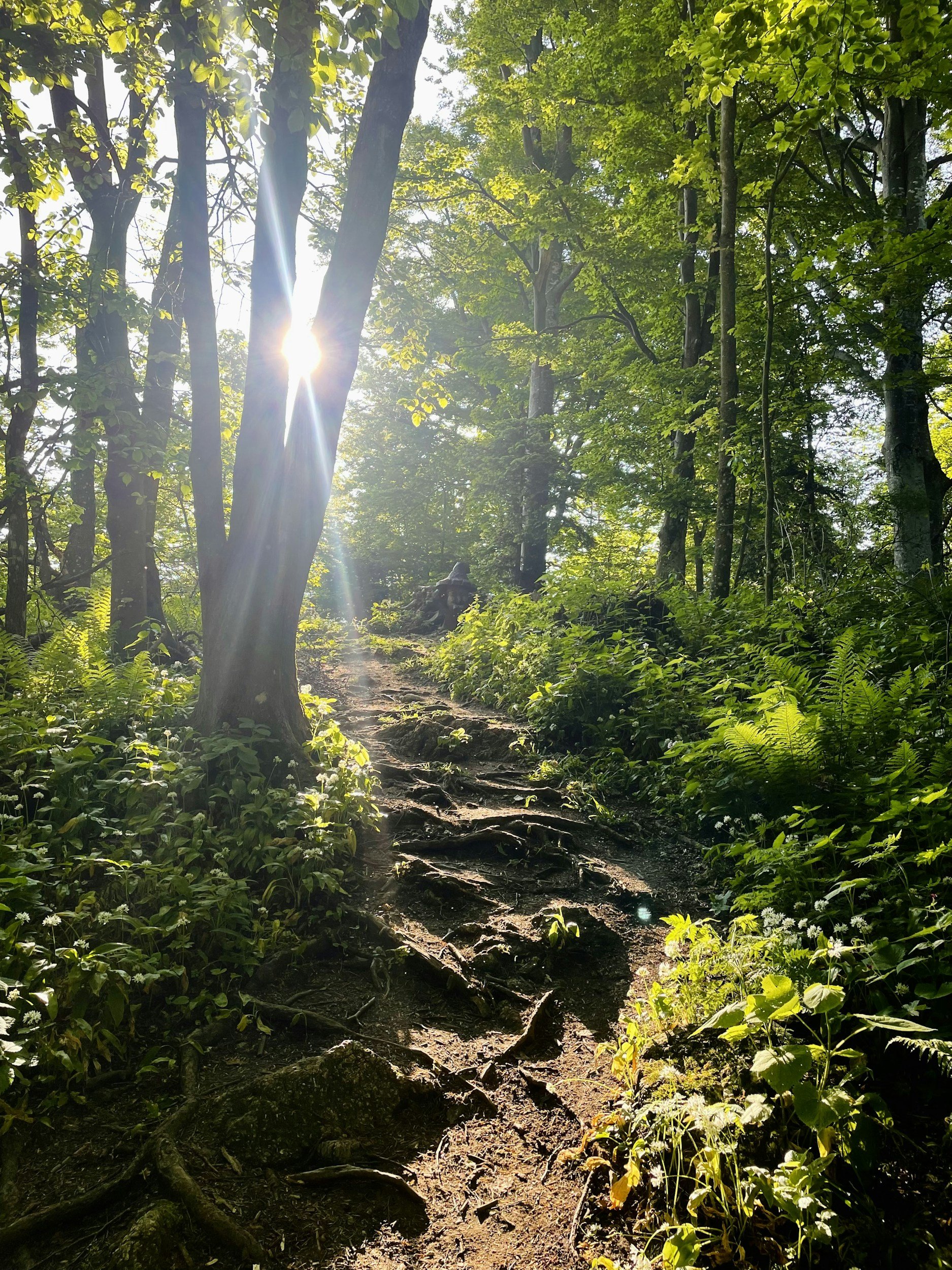
None of that requires giving up who you are. It requires giving up the chronic emergency that's been running in the background of who you are. And that, honestly, is one of the most valuable things a person can do.
Online Therapy for Professionals Who Can't Slow Down — Yet
We understand that if rest already feels impossible, carving out time for therapy can feel like just one more thing on an already impossible list. That's why gokc offers online therapy for clients throughout Missouri and Kansas — sessions conducted via secure video that fit into the margins of even the most demanding schedules.
You can connect with a gokc therapist from your home office, your car during lunch, or anywhere you have 50 minutes and a private space. We have in-person offices in Brookside and Lee's Summit for those who prefer it, and our team of seven therapists brings a range of specialties and approaches so you can find the right fit.
Your Body Has Been Waiting for This
The tension in your shoulders isn't just tension. The racing thoughts at midnight aren't just bad habits. The inability to enjoy what you've built isn't ingratitude. These are signals from a nervous system that has been working incredibly hard, for a very long time, without the support it needs.
You've been listening to every other signal in your life — the calendar, the inbox, the expectations of everyone who depends on you. It's time to listen to this one.
Your nervous system deserves a chance to exhale.

The team at gokc Healing Center is here to help you get there — with warmth, skill, and zero judgment.
Reach out today. → In-person in Brookside or Lee's Summit, or online throughout Missouri and Kansas.